


PLC Control Panels
Application-specific PLC control panels for machine automation, process control, plant automation, data acquisition and industrial control systems.
From PLC hardware selection and electrical engineering to panel assembly, PLC programming, HMI/SCADA integration, networking, testing and commissioning.
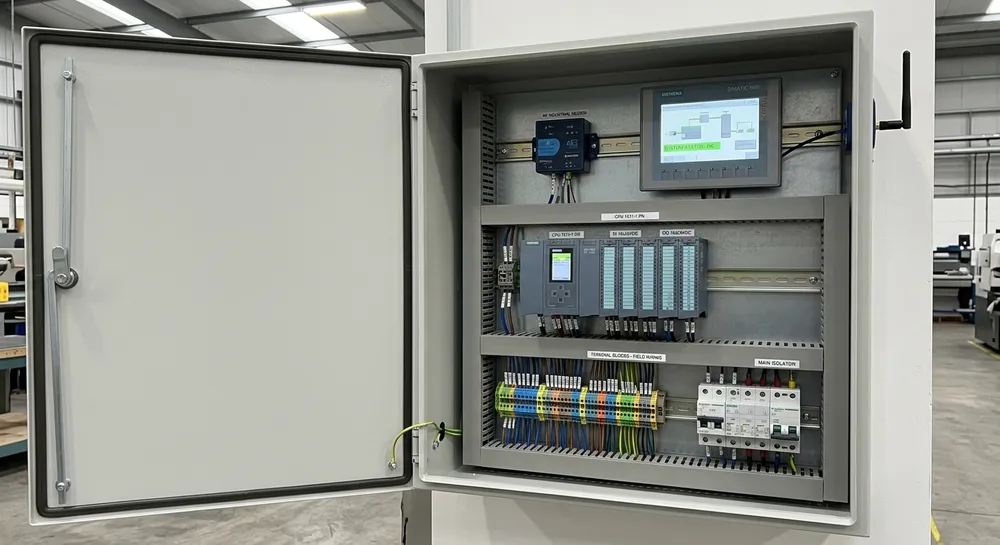
What Is a PLC Control Panel?
A PLC control panel is an engineered control cabinet that brings together the programmable logic controller, power supplies, I/O modules, protection devices, interface relays, terminal blocks, communication equipment and other control components required by an automation system.
The PLC receives signals from sensors and field devices, executes programmed logic and commands outputs such as contactors, solenoid valves, drives, actuators and other equipment.
- PLC CPU and processing architecture
- Digital and analog I/O
- 24 V DC control power
- MCB / fuse / circuit protection
- Interposing relays
- Terminal blocks and field interfaces
- HMI and operator controls
- Industrial Ethernet and fieldbus
- VFD / servo / motion integration
- SCADA / MES / IIoT connectivity
How a PLC Control System Works
A PLC panel connects the field layer, control layer, operator interface and higher-level monitoring systems.
Temperature
Level
Proximity
AI
RTD
TC
Sequence
Interlocks
AO
Relays
Valves
Solenoids
Alarms
Trends
What Goes Inside a PLC Panel?
The actual bill of materials depends on the machine, process, I/O count, electrical architecture and control philosophy.
PLC CPU
Executes the automation program and manages inputs, outputs, communication and control logic.
Digital I/O
Interfaces with switches, sensors, contactors, relays, solenoids and digital field devices.
Analog I/O
Interfaces with pressure, flow, temperature, level and other continuous process signals.
Power Supply
Provides controlled DC power to PLC electronics, I/O modules, sensors and control circuits.
Circuit Protection
MCBs, fuses, MCCBs and related protection devices can be incorporated according to the electrical design.
Interface Relays
Provides electrical isolation and interface between PLC outputs and field equipment where required.
Terminal Blocks
Organized field termination for sensors, actuators, instrumentation and control wiring.
Industrial Ethernet
Industrial switches and communication interfaces connect PLCs, HMIs, remote I/O and other devices.
HMI
Touchscreen operator interface for process visualization, commands, alarms and diagnostics.
Safety System
Emergency stop, safety relays, interlocks and other safety functions can be integrated where required.
VFD / Servo Interface
Integration with variable-frequency drives, servo drives and motion-control equipment.
Cooling & Ventilation
Panel ventilation, fans, filters, heat management or enclosure cooling can be designed according to environmental requirements.
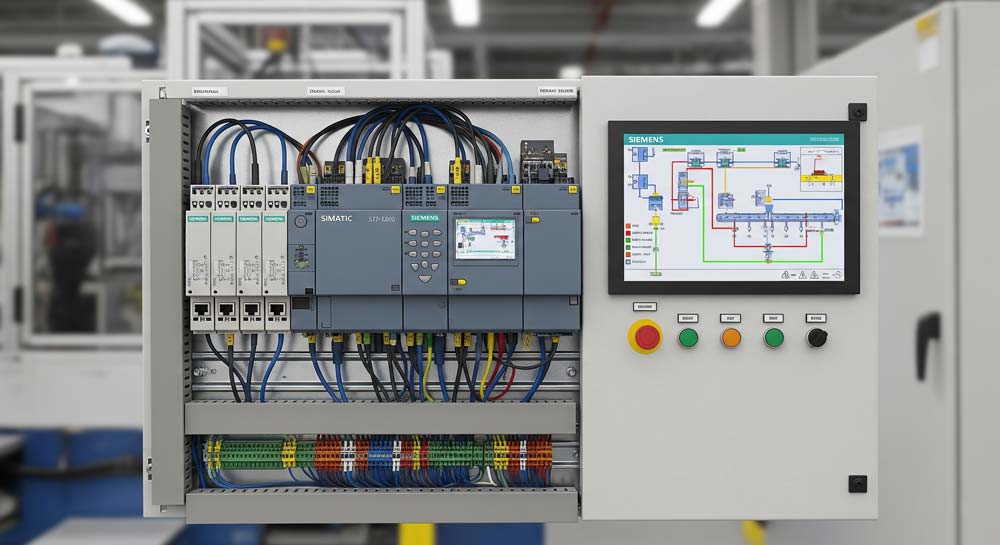
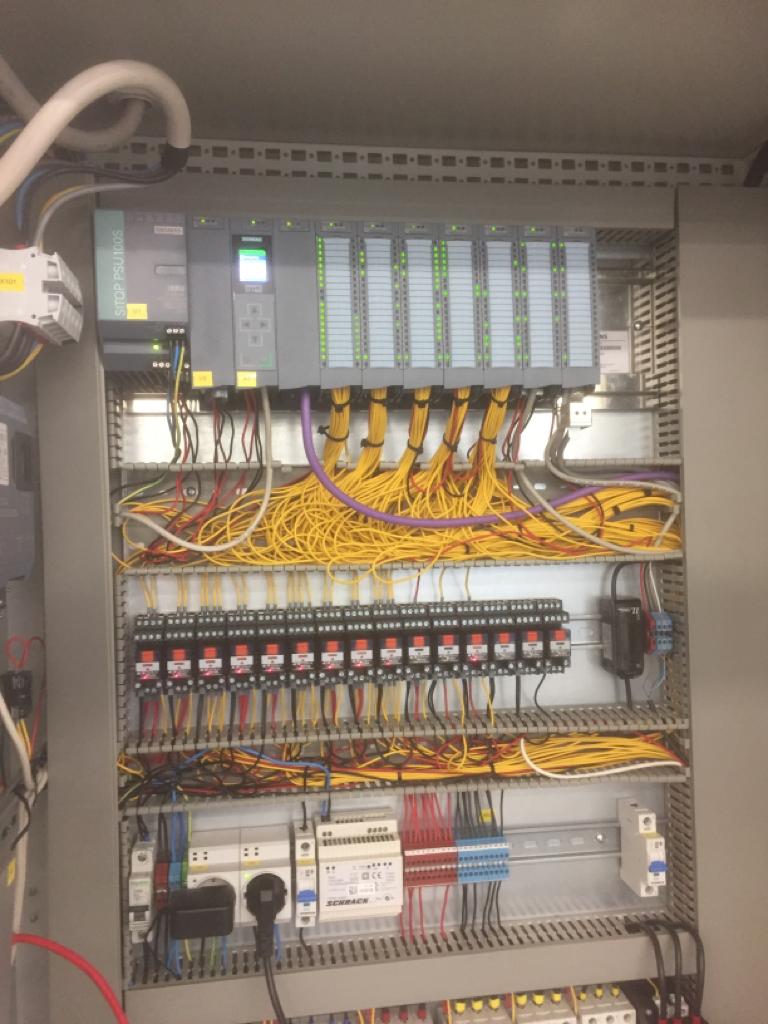
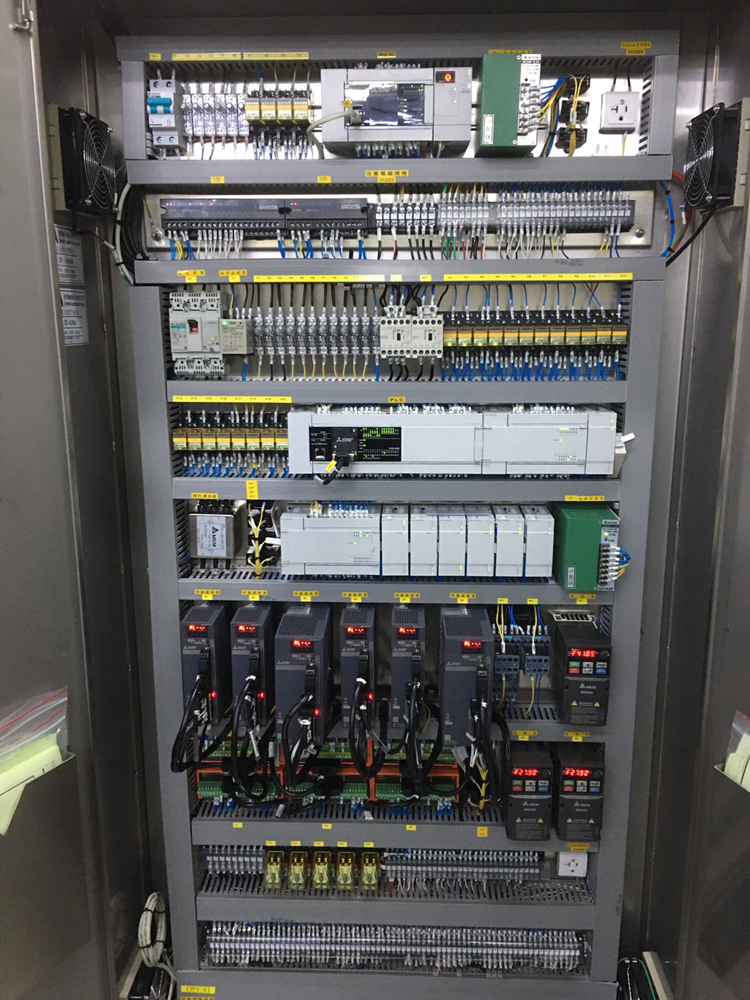
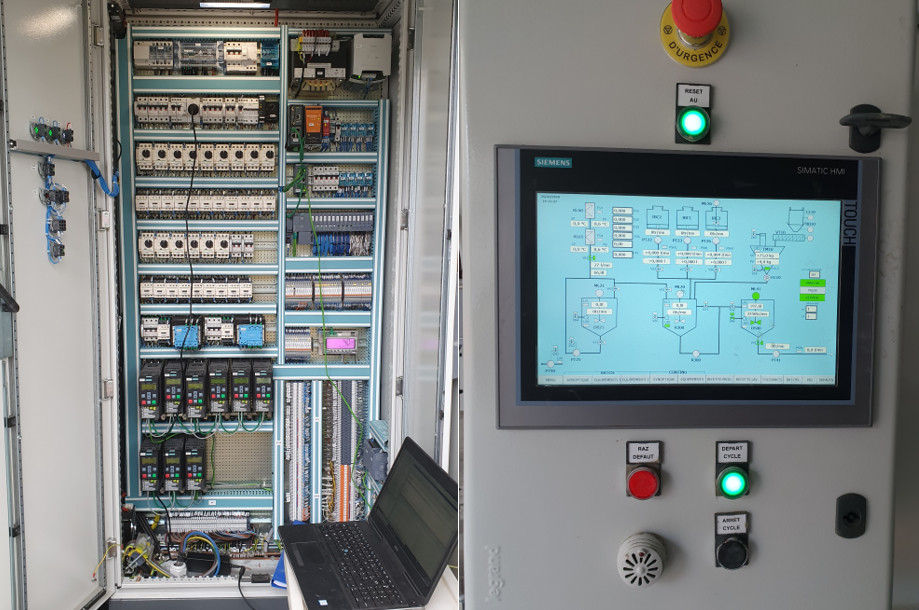
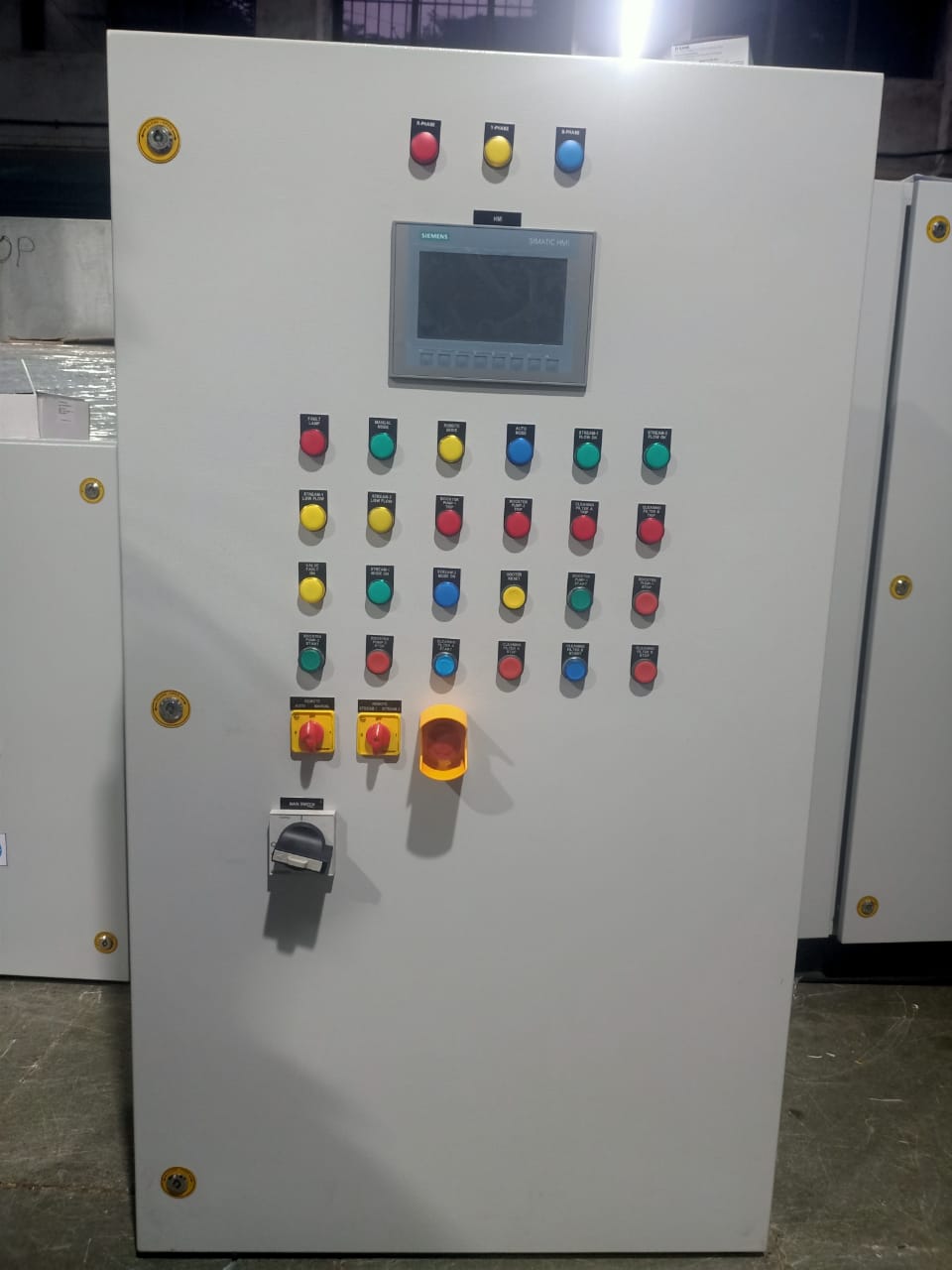
PLC Control Panel – Inside & Outside
Use actual Neo Technologies project photographs here when available. The temporary images below illustrate typical PLC/HMI cabinet arrangements.
PLC Brands & Automation Platforms
PLC panels can be engineered around the customer's preferred automation platform and project standard.
 Siemens
SIMATIC • S7-1200 • S7-1500 • LOGO!
Siemens
SIMATIC • S7-1200 • S7-1500 • LOGO!
 Rockwell Automation
Allen-Bradley • CompactLogix • ControlLogix
Rockwell Automation
Allen-Bradley • CompactLogix • ControlLogix
 Schneider Electric
Modicon • M221 • M241 • M340 • M580
Schneider Electric
Modicon • M221 • M241 • M340 • M580
 Mitsubishi Electric
MELSEC • FX • iQ-F • iQ-R
Mitsubishi Electric
MELSEC • FX • iQ-F • iQ-R
 Omron
CP • CJ • NX • NJ
Omron
CP • CJ • NX • NJ
 ABB
AC500 • Automation Controllers
ABB
AC500 • Automation Controllers
 Delta
DVP • AS • AH Series
Delta
DVP • AS • AH Series
 Beckhoff
TwinCAT • IPC • EtherCAT
Beckhoff
TwinCAT • IPC • EtherCAT
PLC Platform Options
The final PLC family should be selected based on I/O, motion, process complexity, networking, safety, redundancy, lifecycle requirements and customer standards.
| PLC Platform | Typical Architecture | Common Applications | Engineering Ecosystem |
|---|---|---|---|
| Siemens SIMATIC | Compact / Modular / Distributed | Machine, process, plant automation | TIA Portal / STEP 7 / WinCC |
| Allen-Bradley | Compact / Modular / High Performance | Machine and plant automation | Studio 5000 |
| Schneider Modicon | Compact / Modular / PAC | Machine and process control | EcoStruxure |
| Mitsubishi MELSEC | Compact / Modular | Machine, motion and production automation | GX Works |
| Omron | Compact / Modular / Motion | Machine automation and motion | Sysmac / CX ecosystem |
| ABB AC500 | Modular PLC | Process, machine and infrastructure | ABB Automation Builder |
| Delta | Compact / Modular | Machine and industrial automation | ISPSoft / DIAStudio ecosystem |
| Beckhoff | PC-based control | Motion, machine and process automation | TwinCAT |
Where PLC Control Panels Are Used
PLC control systems can be adapted to discrete machines, continuous processes, utilities and integrated plant automation.
Manufacturing Automation
Production machines, assembly lines, interlocks, sequencing and machine monitoring.
Water & Wastewater
Pumps, blowers, dosing, filtration, tank levels, valves and process sequencing.
Solar & Energy
Plant auxiliaries, monitoring, control, communication and energy-management interfaces.
Textile Machinery
Machine sequencing, drives, sensors, motion and production-line automation.
Material Handling
Conveyors, elevators, sorting, palletizing and warehouse automation.
Packaging Machines
Sequence control, sensors, servo systems, drives, counters and machine synchronization.
HVAC Automation
AHU, pumps, chillers, fans, temperature, pressure and energy monitoring.
Process Industries
Batching, mixing, dosing, temperature, pressure, flow and level control.
Machine Tools
CNC auxiliary systems, machine sequences, interlocks, lubrication and peripheral control.
Boiler & Utility Systems
Pump sequencing, burner interfaces, alarms, interlocks and utility automation.
Industrial Robotics
PLC-based cell coordination, safety signals, conveyor interfaces and robot communication.
Fire Fighting Vehicles
Vehicle automation, pump controls, monitoring, interlocks, sensors and operator interfaces.
Complete PLC Panel Engineering
Neo Technologies can structure PLC control-panel projects from electrical engineering through automation programming and commissioning.
01. Requirement Engineering
Process understanding, machine sequence, I/O requirements, control philosophy, interlocks and customer specifications.
02. PLC Selection
PLC family, CPU, memory, digital I/O, analog I/O, communication modules, remote I/O and expansion architecture.
03. Electrical Design
Power distribution, control circuits, protection, terminal arrangements, schematics and panel layout.
04. Panel Manufacturing
Enclosure preparation, DIN rail assembly, component mounting, wiring, ferruling, labelling and documentation.
05. PLC Programming
PLC logic, sequences, timers, counters, interlocks, alarms, analog processing, recipes and machine logic.
06. HMI Development
Screens, process visualization, alarms, trends, diagnostics, user controls and operator navigation.
07. SCADA Integration
PLC-to-SCADA connectivity, tags, alarms, historical data, trends and plant-level monitoring.
08. VFD & Servo Integration
Drive start/stop, speed references, status feedback, fault handling and communication-based control.
09. Industrial Networking
Industrial Ethernet and other project- appropriate communication architectures for PLCs, HMIs, drives and remote I/O.

PLC Panel Design Considerations
Every PLC cabinet should be engineered around the application rather than selected only by cabinet size or PLC model.
PLC & CPU
- CPU performance
- Program memory
- Data memory
- Scan requirements
- Local I/O
- Remote I/O
- Expansion capability
Digital Inputs
- Proximity sensors
- Limit switches
- Selector switches
- Pressure switches
- Auxiliary contacts
- Emergency / safety signals
Digital Outputs
- Contactors
- Solenoid valves
- Relays
- Lamps
- Actuators
- Motor commands
Analog Inputs
- 4–20 mA
- 0–10 V
- RTD
- Thermocouple
- Pressure transmitters
- Flow transmitters
- Level transmitters
Analog Outputs
- Speed reference
- Control valve
- Process setpoint
- Drive reference
- Actuator control
Panel Construction
- Wall-mounted enclosure
- Floor-standing enclosure
- Multi-door cabinet
- DIN rail architecture
- Cable ducts
- Terminal sections
- Cooling / ventilation
PLC Communication & Industrial Networking
The communication architecture should be selected according to the PLC platform, field devices, required performance and project standard.
PLC Control Panel Specification
The final specification is prepared from the project's electrical, automation and environmental requirements.
Electrical
- Incoming supply – project dependent
- Control supply – commonly 24 V DC
- PLC power supply
- Control circuit protection
- Short-circuit protection
- Earthing arrangement
- Surge protection where required
PLC
- CPU selection
- Digital inputs
- Digital outputs
- Analog inputs
- Analog outputs
- High-speed I/O where required
- Communication modules
- Remote I/O where required
HMI / SCADA
- Operator interface
- Alarm display
- Process status
- Trend visualization
- Recipe management where applicable
- Historical data
- User access control
Mechanical
- Wall / floor mounted
- Single / multi-door
- Panel dimensions
- Enclosure material
- Paint / surface finish
- Cable entry arrangement
- Cooling arrangement
- Environmental protection requirement
Documentation, Testing & Commissioning
A professional automation project requires more than mounting a PLC in a cabinet. Electrical drawings, I/O documentation, software backup, network information and testing records are important for future maintenance.
- Electrical schematic documentation
- Panel layout documentation
- I/O list
- Terminal schedule
- Cable identification
- PLC program backup
- HMI project backup
- Communication configuration
- Functional testing
- I/O checking
- Loop checking where applicable
- Site commissioning support
From Requirement to Commissioning
Requirement
I/O & Architecture
Electrical Design
Panel Assembly
Programming & FAT
Commissioning
What We Need to Design Your PLC Panel
Providing the following information allows the panel architecture and quotation to be developed more accurately.
Process Description
Machine sequence, process description, operating modes and control philosophy.
I/O List
Digital, analog, temperature, high-speed, communication and special I/O requirements.
Electrical Details
Supply voltage, load details, motor data, short-circuit level and protection requirements.
PLC Preference
Customer's preferred PLC make, model, software ecosystem and plant standard.
Communication
HMI, SCADA, VFD, remote I/O, MES, ERP or third-party communication requirements.
Site Conditions
Indoor/outdoor installation, ambient conditions, dust, humidity, temperature and enclosure needs.
Need a PLC Control Panel for Your Project?
Send your SLD, I/O list, panel specification, machine details, PLC preference or project requirement to Neo Technologies for an engineering discussion.
PLC Control Panel Frequently Asked Questions
What is a PLC control panel?
A PLC control panel is an engineered enclosure containing a programmable logic controller and associated power, protection, I/O, communication, interface and field-termination components used to automate machines or industrial processes.
What components are included in a PLC panel?
Depending on the application, the panel may include PLC CPU, digital and analog I/O, power supply, MCBs or fuses, relays, terminal blocks, communication equipment, HMI, industrial Ethernet switches, safety components, signal isolators, drives and other control equipment.
Which PLC brands can Neo Technologies work with?
PLC architecture can be developed around customer-selected platforms such as Siemens, Rockwell Automation / Allen-Bradley, Schneider Electric, Mitsubishi Electric, Omron, ABB, Delta and Beckhoff, subject to project requirements, available engineering resources and customer specifications.
Can PLC panels include HMI?
Yes. HMI can be integrated into the panel door or supplied as a separate operator station. The HMI can provide machine controls, process visualization, alarms, diagnostics, trends and other operator functions.
Can a PLC panel communicate with SCADA?
Yes. PLC systems can be integrated with SCADA using the communication architecture and protocol appropriate to the selected PLC, SCADA platform and project requirements.
Can VFDs and servo drives be integrated with PLC?
Yes. PLC systems can exchange commands, speed references, status information, alarms and other data with drives through hardwired or supported communication architectures.
Are PLC panels suitable for water treatment plants?
Yes. PLC panels are commonly used for pump sequencing, level control, dosing, filtration, valve control, blower control, alarms and integration with HMI/SCADA in water and wastewater applications.
Can the PLC panel be expanded later?
Modular PLC architectures can be designed with future expansion in mind. The practical expansion capacity depends on the selected PLC, CPU, I/O architecture, power supply, communication capacity and physical panel space.
What documents are normally associated with a PLC panel?
Depending on project scope, documentation may include electrical schematics, panel layout, I/O list, terminal schedule, cable schedule, PLC program backup, HMI project backup, communication details, manuals and test records.